SocialMediaCamp London
As I said in a previous post, two weekends ago I went to the first London Social Media Camp. I’m a regular BarCamper and I love the atmosphere surrounding these type of events. But there are a lot of events out there calling themselves “blabla”-Camp, without actually embodying the whole BarCamp mentality. I had previously gone to two MediaCamps and while they were interesting days (I met a lot of great people), they didn’t have the right to call themselves a BarCamp.
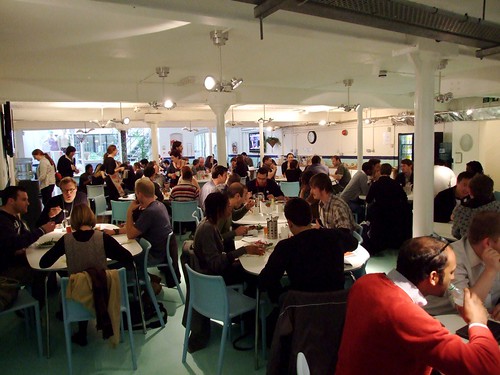
So I had my doubts before this SocialMediaCamp, but I shouldn’t have worried. Vero had organized everything so perfectly, it truly felt like a real BarCamp. I think the only thing that was missing was that it wasn’t two days (and thus no overnighter). For the rest though it was fantastic. I think we even had better food here than at BarCampGoogle!
During the first session slot, I didn’t go to any presentations. Friends kept dripping in late and I got caught up in catching up with all of them. I am regretting that tough, because I heard a lot of good comments on Tom Whitwell‘s talk about How To Write Awesome Headlines. I already had missed it during the eBay BarCamp the week before and now I missed it again. The rest of the day though I made sure I went to a presentation every session. Here’s a quick recap:
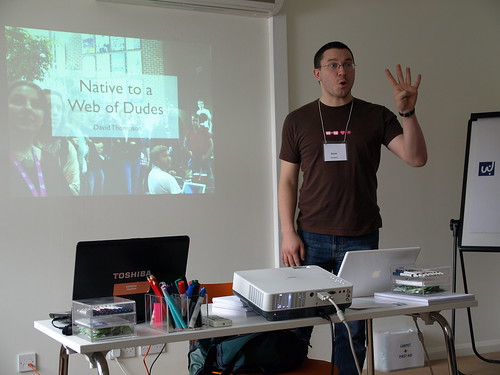
Native to a Web of Dudes
I saw this session on the board at BarCamp eBay, but because of the unclear name decided not to go to it. During the SocialMediaCamp breakfast I talked to David Thompson who explained to me what it exactly was about. I told him at the time the title really wasn’t working for it. Anyhow, it turned out to be an interesting session on microformats and how relationships should be represented online.
TV Branding
I then went to a session about TV branding for the digital era. It was all about how to build brand equity through aggregation, placement and promotion. Some cool things were mentioned like TV tie-in ARGs (like Heroes and Lost).
Alternate Reality Games
I repeated the session I held at BarCamp eBay, and this time I had 15 attendees! Like last time, I hadn’t prepared any slides, doing more of a show-and-tell of the websites and games I had played. It was interesting to see the questions and discussions during this talk take a different route than the previous time. Here a lot of people were interested in the marketing/business side of it all.
Managing Your Online Reputation
This session from Vero was about how to manage your online identity and reputation (as the title says). It quickly turned into a discussion with everyone chiming in with their own point of view. Should employers be allowed to judge their employees based on Facebook updates?

Social Media – How Not To Get Fucked
Zoe aka Girl With A One Track Mind gave a short presentation about losing her online anonymity (for those of you who don’t know her: she was an anonymous sex blogger and her real identity was revealed in the press). This also turned into a discussion and it was a nice companion to Vero’s talk. Here though it was more about maintaining different personas. You act differently for family, friends and work and now with the “online” world, there may be even more types of groups.
Blogging Breakdown
Another session I missed during BarCamp eBay, so I was glad to catch it here. Annie Mole from London Underground blog talked about being under pressure to write a blog post. She also mentioned some cool facts about blogging, like the state of the “blogosphere” and research into why people blog. Her slides are up on slideshare if you want to check them out.
Social Media Bingo
The day ended with a cool game of Social Media Buzzword Bingo. Emma and Utku had written tons of buzzwords on a couple of white boards and everybody had to go around creating 4×4 bingo cards made up of those buzzwords. Then one by one every player had to come forward to create a pitch for a web startup for the three buzzwords they pulled. I went twice with “Creating an algorithm to calculate statistics of people commenting by email” and “Developing a proof of concept for the lifecasting of a werewolf hunter”.
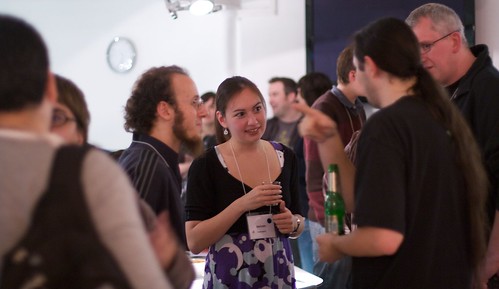
Afterwards there were free drinks and time to mingle and chat with people. I talked briefly with a bunch of people (most of whom I didn’t get a business card, so sorry, but no idea anymore who you all were). After a while everyone thought the tab ran out (it hadn’t, but everyone thought it had), a group of about 13 decided to grab some dinner together, All together it was a great event and I’m looking forward to the next SocialMediaCamp!